Skip to content

Shared property. Significant responsibility.

Large Condominium & Association Property Claims

A major association loss affects more than one owner or one repair. Sotero Law helps condominium associations and other property associations address substantial building damage, disputed insurance coverage and the records needed to support a coordinated claim.

PRACTICAL PERSPECTIVE. LEGAL PURPOSE.

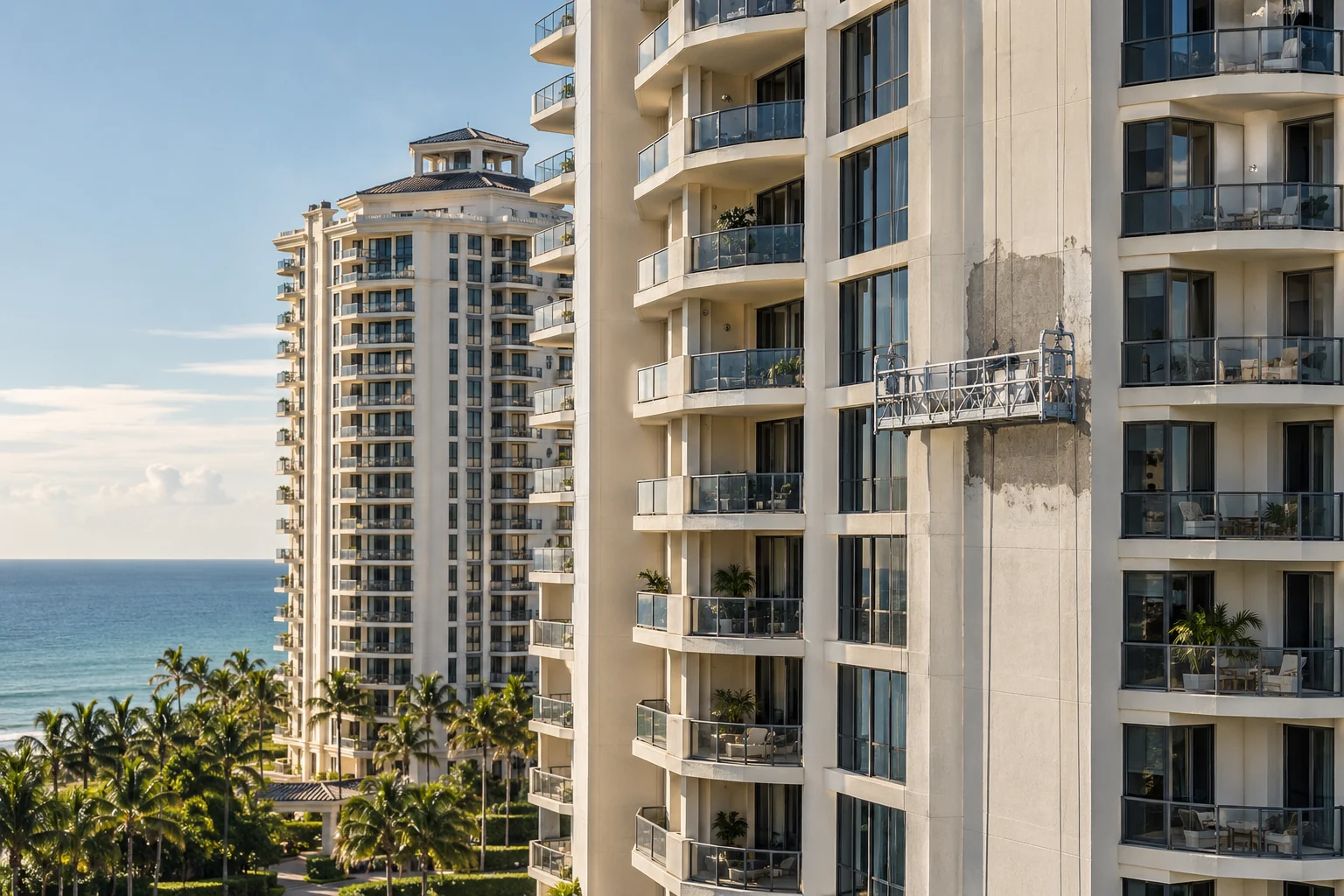
Coastal condominium towers with a suspended façade inspection platform.

YOUR CIRCUMSTANCES. YOUR OBJECTIVES.

A focused approach to major association losses

This practice focuses on significant association property-insurance matters: damaged building envelopes, roofs, common systems, shared facilities and losses affecting multiple structures or units. The issues may include disputed causation, incomplete repair scope, valuation differences, underpayment or denial under the association’s policy.

The association’s claim must be understood on its own terms. Sotero Law identifies the legal entity, the board or representative authorized to act, the affected property and any existing advisers. Representing an association does not automatically mean representing every unit owner, director or management company individually.

  • Hurricane and windstorm damage to roofs, façades and building envelopes.
  • Water intrusion, structural damage and common-area losses.
  • Fire damage and losses involving mechanical or shared building systems.
  • Flood-related damage where the applicable policy provides coverage.
  • Business-income or extra-expense issues where relevant coverage was purchased.

HOW SOTERO LAW CAN HELP

Association coverage disputes

Review master-policy terms, insured interests and the stated reasons for denial or underpayment.

Multi-building claim records

Organize damage, inspections and repair information by building, system and issue.

Scope and valuation issues

Evaluate disputed restoration work, mitigation costs and supporting documentation.

Claim and repair coordination

Address legal questions involving the association, its advisers and the insurance process.

Understand the master policy and the insured property

A complete review considers the master policy, declarations, endorsements, building schedules and applicable deductibles alongside the governing documents. Flood, excess and other coverage may introduce separate insured interests, conditions and procedures. The question is not simply whether a building is insured, but which property and risks each policy addresses.

Florida’s residential condominium insurance provisions distinguish certain association and unit-owner responsibilities. Commercial condominiums and homeowners associations can present different issues. Even a commercially written residential-association policy may be classified as residential coverage under Florida law. Neither the association’s label nor the building’s size answers every coverage question.

Build a record across buildings, systems and repairs

Large claims need a consistent way to identify damage without losing building-specific detail. Photographs, inspection reports, roof and façade records, original plans, maintenance history and contractor estimates should identify the property, date and claimed cause. A location schedule helps prevent omissions and inconsistent descriptions.

Repair decisions can involve engineers, contractors, property managers and insurance representatives. Sotero Law works with the legal and documentary issues surrounding those roles, including disputed scope, mitigation expenses and the relationship between insured damage and other required work. An age-related condition, deferred maintenance or mandatory upgrade is not automatically an insured loss.

Coordinate the claim while preserving the distinctions

The master-policy claim, a unit owner’s separate coverage and a loss assessment are related but different matters. Available insurance and responsibility for reconstruction or shared expenses require review of the applicable law, policies, governing documents and facts. The association should not assume that one claim resolves every owner’s position.

Sotero Law evaluates the claim history, outstanding requests, prior payments and reasons for disagreement before considering negotiation or available dispute-resolution procedures. Notice, sworn proof-of-loss and litigation obligations must be identified individually. Federal flood procedures should not be replaced with a general Florida property-claim deadline.

A practical understanding of property and insurance operations

Before entering legal practice, Albert Sotero’s insurance work included commercial risks, condominium associations and contractor programs. His broader background includes underwriting, program administration and claims-administration arrangements, together with construction and development experience.

That perspective helps frame questions about building conditions, repair scope, records and the operational consequences of a major loss. It does not replace independent engineering or other technical opinions. Admitted to The Florida Bar in 2024, Albert brings that prior business experience to a defined legal engagement.

Frequently asked questions

Is this a general homeowner insurance practice?

This page addresses major association and shared-property losses. An individual owner’s separate policy claim or dispute with an association requires its own scope and conflicts review.

Does the master policy cover everything inside each unit?

Not necessarily. Florida law and the policies distinguish categories of association and owner property. Review the specific damaged item, location, policy and applicable condominium provisions before assigning responsibility.

Are safety upgrades or existing deterioration part of the claim?

They are not automatically covered. The cause of damage, pre-loss condition, applicable coverage and repair requirements must be assessed separately, with appropriate technical input.

Can one association claim involve several policies?

Yes. Master property, flood and excess policies may address different portions of the loss. Each policy’s insured interests, limits, exclusions and procedural requirements need individual attention.

RELATED READING

General information, not advice for a particular matter. Facts, policies, contracts, governing law, and deadlines require individual review. A consultation request does not create an attorney-client relationship or stop a deadline.

LET’S DISCUSS WHAT COMES NEXT

A clear view of your next move.

Request a Consultation