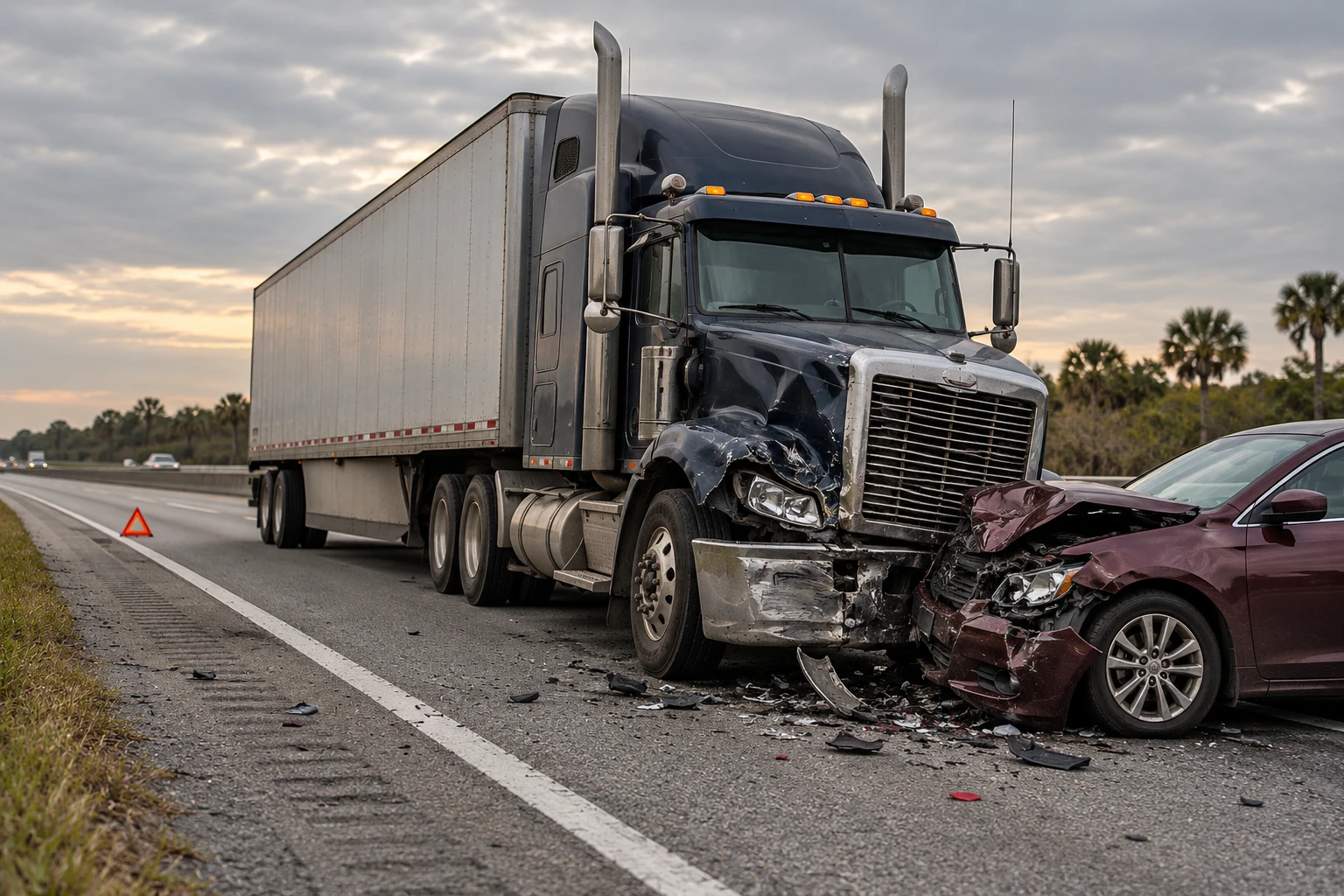
Serious injuries and fatal incidents
A truck collision may involve the driver, motor carrier, vehicle owner and other participants. Their presence alone does not establish fault. Review considers the event, party relationships, injury evidence and conduct that may have contributed to the loss.
Where relevant, the investigation can address driver qualifications, hours-of-service records, inspection and maintenance, dispatch communications and available vehicle or video data. The operation and applicable exceptions determine which federal rules apply. A records deficiency or safety violation must be evaluated in context, including causation.
For a Florida wrongful-death matter, the action is brought by the deceased person’s personal representative for the eligible survivors and estate under the governing law. Family relationships and estate status should therefore be identified early.
Cargo damage and commercial losses
Missing, damaged or delayed freight requires a shipment-specific file. The bill of lading, rate confirmation, tender instructions, delivery record, cargo value and condition at each transfer can help identify the responsible undertaking and the actual loss claimed.
The Carmack Amendment may govern qualifying interstate motor-carrier cargo claims. It is not the general rule for bodily injury, every broker dispute or every shipment combining truck, vessel and aircraft movements. Route, contracts, party roles and applicable law must be reviewed before selecting a claim strategy.
A delivery damage notation does not necessarily satisfy formal cargo-claim requirements. Preserve the damage documentation and proof of any required claim submission.
Insurance and transportation contracts
Public-liability, commercial-auto physical-damage, cargo and excess insurance address different exposures. A certificate or federal insurance filing does not replace the full policy. Review should identify the insured, covered operation, vehicle, endorsements, exclusions and communications about the particular loss.
Federal financial-responsibility requirements vary; they do not establish one universal policy limit or guarantee that a stated amount is collectible. Cargo insurance also should not be assumed merely because a carrier maintains liability coverage. Contractual indemnity, transportation agreements and insurance-program questions belong in a separate analysis from an injured person’s claim.
An insurance-business perspective
Before entering legal practice, Albert Sotero developed and managed commercial insurance programs, including a nationwide trucking program. His business background includes underwriting, program administration, fronting-carrier arrangements, captives, reinsurance and claims administration.
That background informs his attention to how a transportation risk was described, how coverage was arranged and how claim information moves between organizations. He was admitted to The Florida Bar in 2024. His earlier insurance-business work is distinct from his experience as an attorney.
Build a focused record for the next decision
Initial review connects the incident or shipment timeline to the people, contracts, policies and evidence. It identifies notices, claim requirements and deadlines needing attention. Further investigation, a claim submission, negotiation or litigation depends on that review.
Request a consultation with a short description of the loss and any approaching deadline. A request alone does not establish an attorney-client relationship or confirm that the firm has undertaken to protect a deadline.